TABLE OF CONTENTS
Introduction
A course map is a blueprint of your course, outlining how you have broken down your student learning outcomes into manageable pieces and how you have scaffolded the learning experience to make learning intentional and measurable to track student growth. Creating an intentionally designed course map is difficult. However, using a process known as backward design, it can get a bit easier.
This guide includes a video tutorial to break down backward design, and how it applies to completing a course map before listing the general steps we recommend for designing your course backward.
If you'd like to try creating your own map to visually see how your goals, major assignments, quick and instructional materials align, you can then make a copy of our course map template.
Video Tutorial
Larger Course Goals
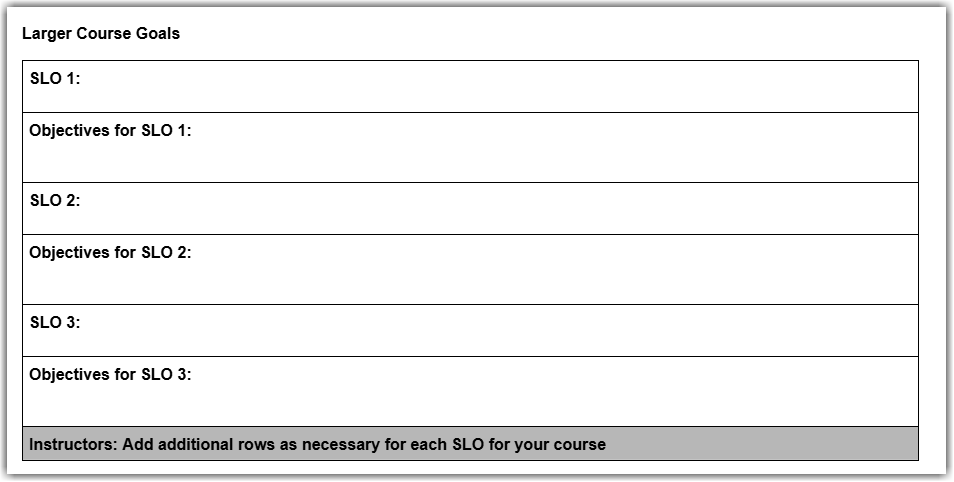
Each of your student learning outcomes should be broken down into smaller objectives, or measurable pieces. Ask yourself, before a student can fully master this SLO, what do they need to be able to do first, second, third, etc. Once you have these in place, make sure each step is measurable with a measurable and active verb that reflects what you want a student to be able to do before moving on to the final step (your SLO).
Our Larger Course Goals table provides you with space to list each objective that must be met for each SLO. Filling this table in first requires you to only plan how students can achieve the SLOs rather than a specific assignment or textbook reading. Your goals should always be front and center and are not textbook dependent.
Alignment Breakdown
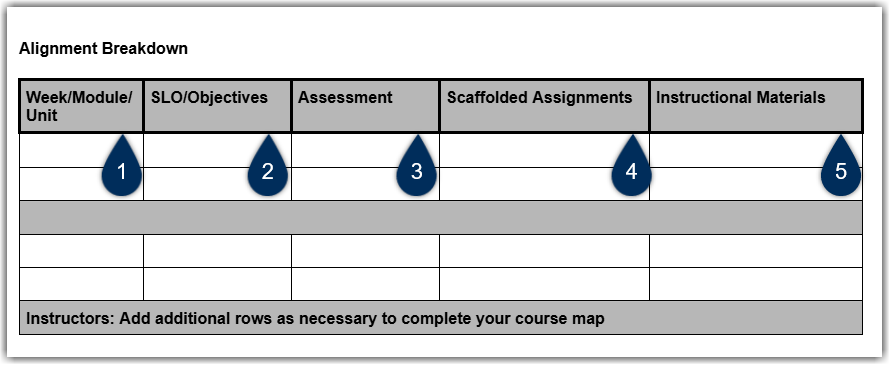
Now that you know what students need to accomplish and how (through your objectives), you can complete your Alignment breakdown.
- Decide how you want to divide your course content (modules, weeks, or units)
- List your objectives in the appropriate location for when students are expected to complete the objective(s)
- Include your assessments based on the active verb you have written for your objective/SLO
- Decide how you may need to scaffold (or build) towards your assessments with smaller assignments meant more for feedback for improvement
- List the instructional materials students need to work through in order to complete your scaffolded assignments and assessments. Instructional materials could include textbook readings, online articles, or video lectures
Revise
A course map can help you feel more confident in why you are teaching and covering specific material in your course. However, students change, content changes, and the technology we have available to us changes. Therefore, it's important that you see your course map as a living document rather than static. Share your course map with the Teaching and Learning team, your supervisor, a fellow instructor, and see where you may need to revise your map to maintain alignment and relevant.
Useful Resources
Navigate to our other course design guides to help you create your course map:
Was this article helpful?
That’s Great!
Thank you for your feedback
Sorry! We couldn't be helpful
Thank you for your feedback
Feedback sent
We appreciate your effort and will try to fix the article